01
Moisture in every portion
Fresh shoots bring plant-associated water into the ration. Batch analysis determines the precise amount. Clean drinking water must remain available.
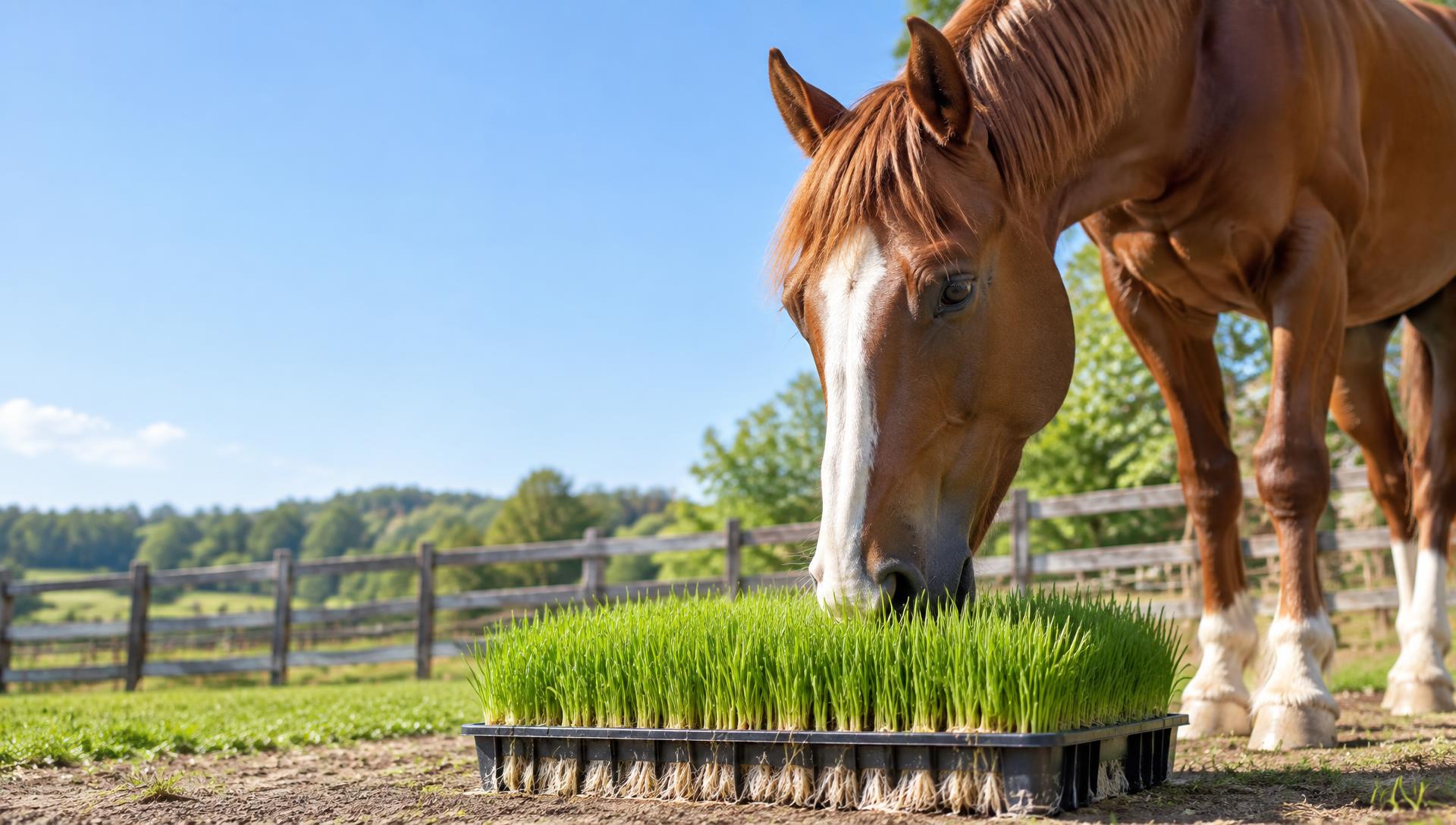
A fresh component of a balanced ration
Fresh shoots · Natural moisture · Thoughtful feeding
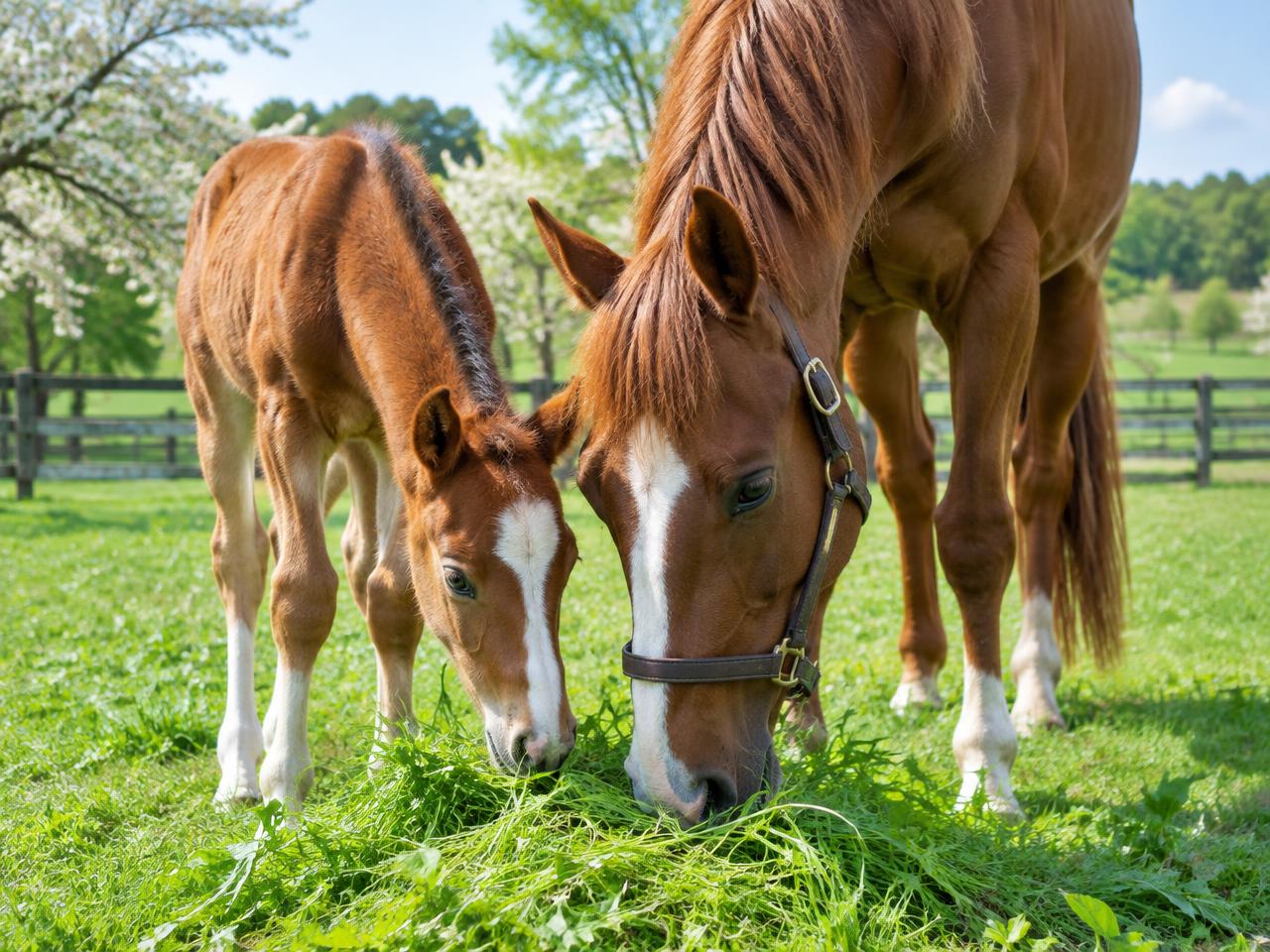
Natural fresh fodder that horses love! ♡
Our newsletter is being prepared. You can save your voluntary preference and withdraw it at any time. We are not sending emails yet.
Verify email to save your preferencePrivacy policyA balanced ration
Plant nutrients
Controlled growing
Fresh shoots
Natural moisture
Fresh barley fodder contains important nutrients that contribute to your horse's overall health.
Fresh barley fodder is a great supplement to your horse's regular diet. Ideal for:
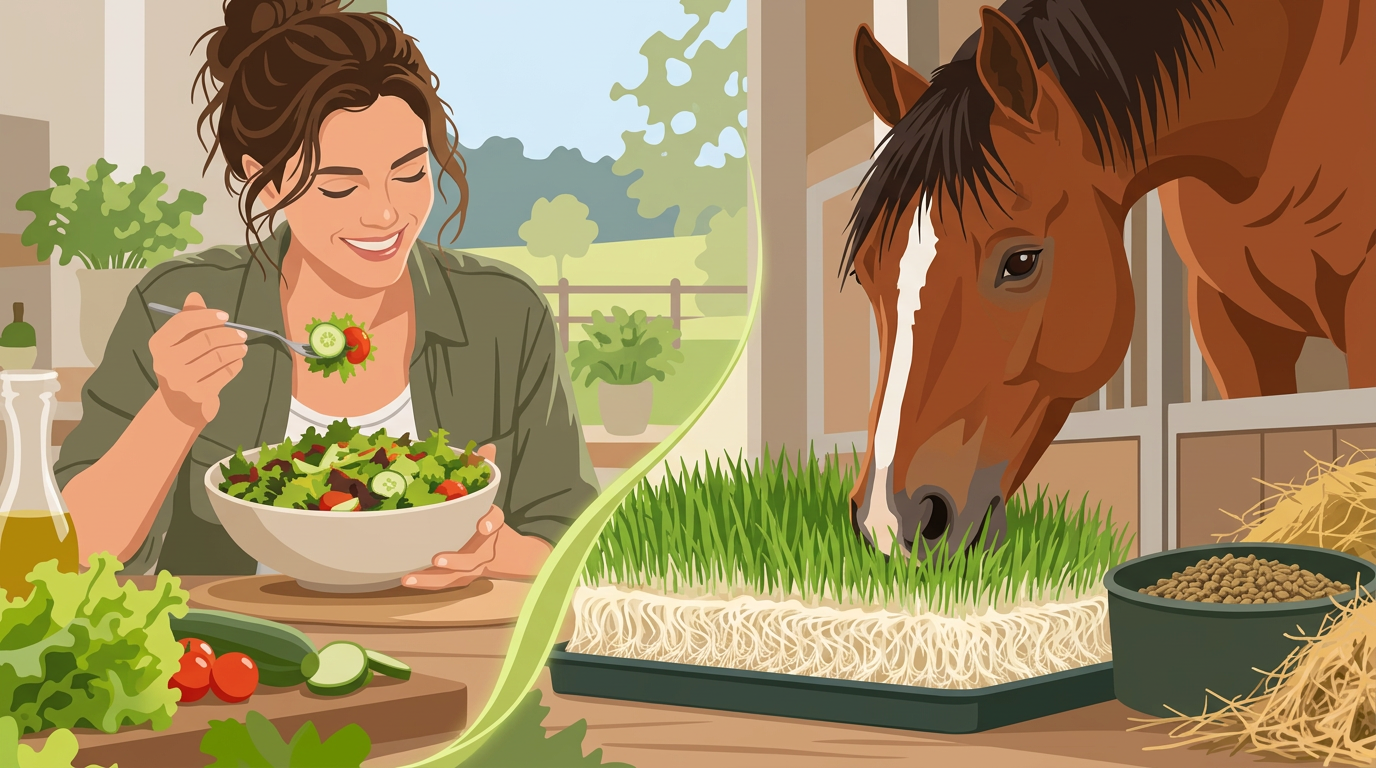
We can imagine why fresh green food might appeal to our horses too.
Imagine preparing a fresh salad. Crisp vegetables, a fresh scent and natural moisture. It is a different experience from opening a pack of dry food that keeps for a long time in storage.
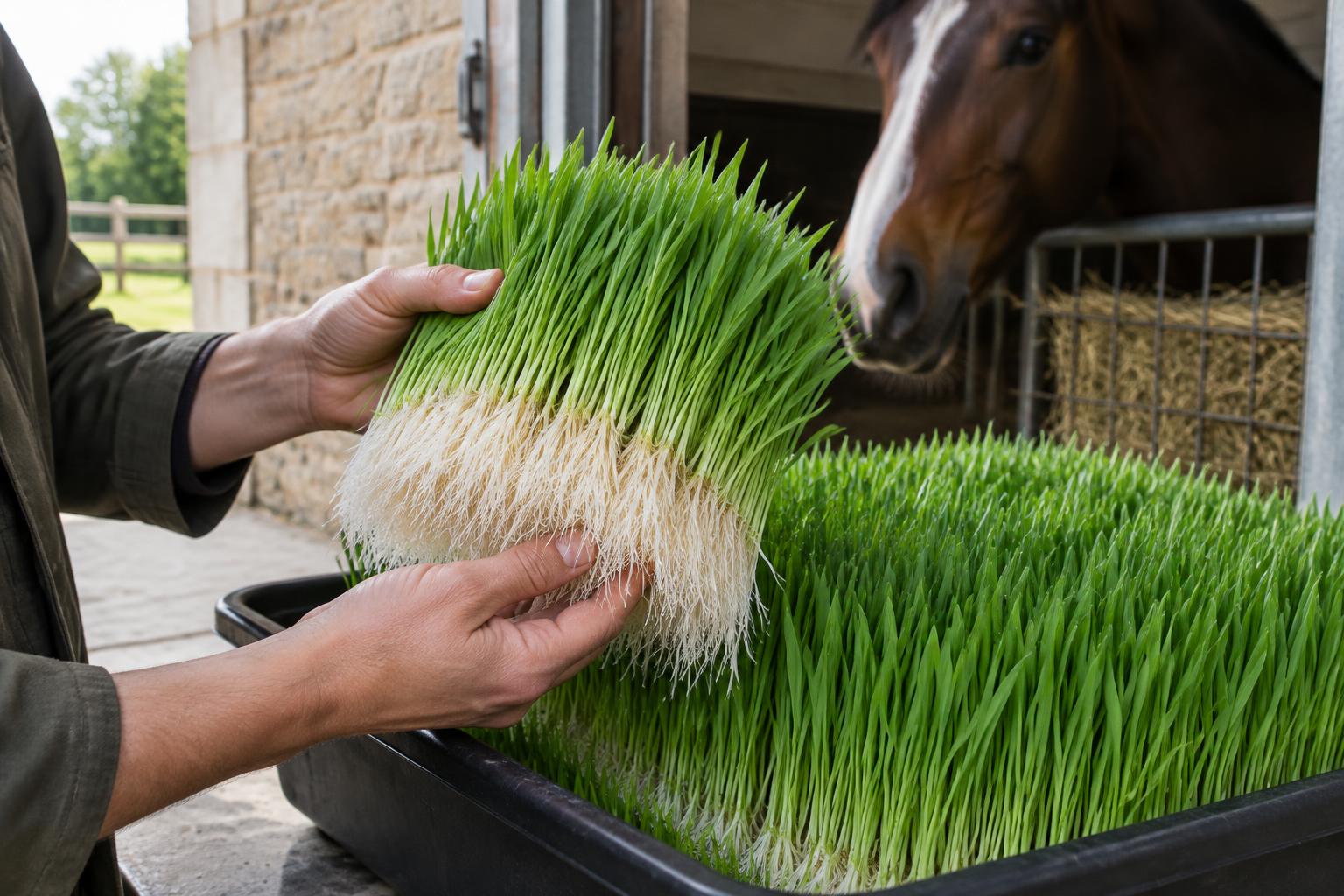
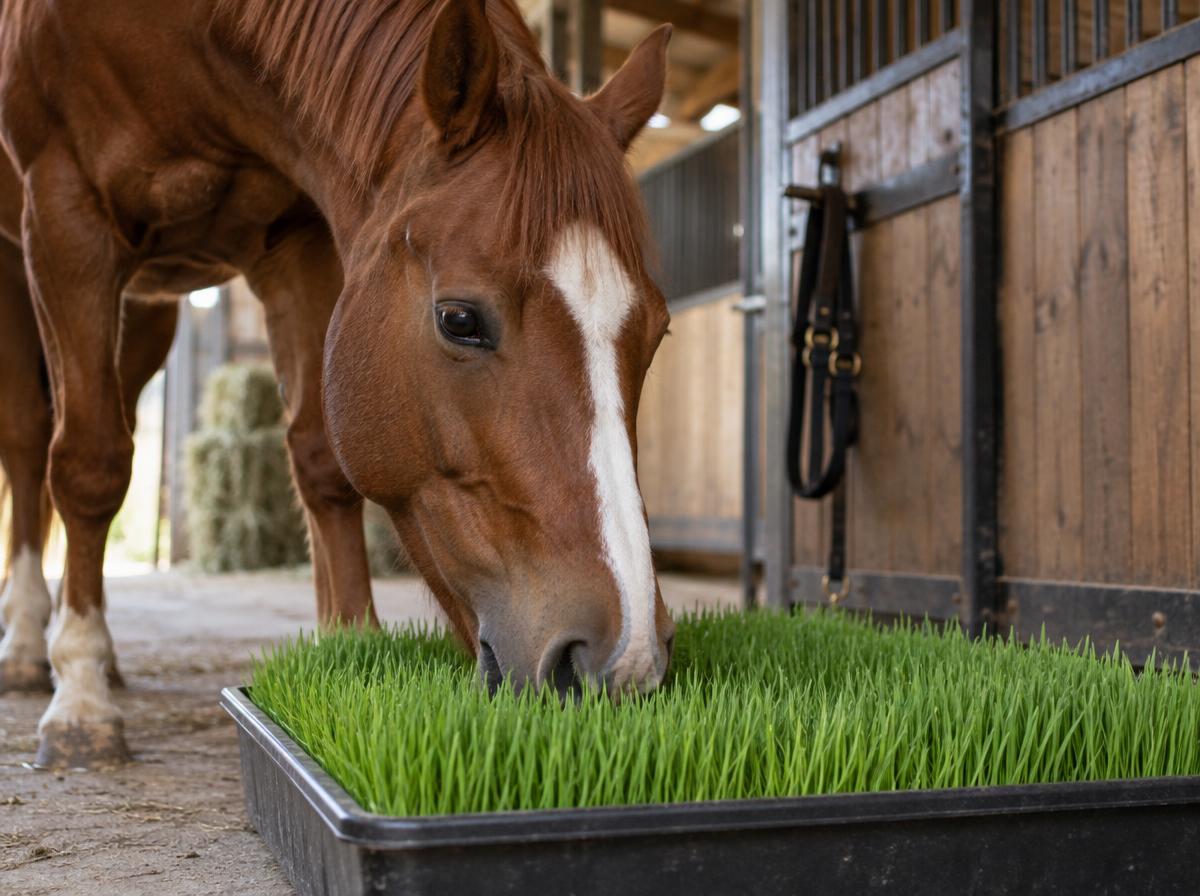
Now imagine your horse receiving fresh green barley shoots. Hydroponically grown fodder brings something different to the ration: young green plants with their natural water content, which you can offer alongside hay and other suitable components.
The point is not to say that dry feed is bad. Good hay and properly formulated complete feeds have their place in horse care. The point is to discover what fresh fodder can offer too.
Dry and complete feeds can be a practical part of a balanced ration. Some products also contain permitted colourings, preservatives, antioxidants or other additives; others may not. Their use and labelling are governed by European regulations on feed additives. That is why it is always worth reading the ingredients of a specific product.
Dust during feeding, colourings or preservatives in the ingredients: questions worth considering. Yet dry feeds vary considerably. Fresh barley shoots offer natural moisture with no added colourings or preservatives — as a supplement, not a replacement for good hay and a balanced ration.
Dry feeds and hay
Varies with feed type, quality and storage. Hay and some dry feeds can release dust during handling.
Fresh barley fodder
Fresh, moist shoots are not a dry loose feed. Inspect each portion before feeding.
Qualitative comparison — not a dust measurement, laboratory analysis or rating of a specific product.
| Characteristic | Dry feeds and hay | Fresh barley fodder |
|---|---|---|
| Dust | Varies with feed type, quality and storage. Hay and some dry feeds can release dust during handling. | Fresh, moist shoots are not a dry loose feed. Inspect each portion before feeding. |
| Preservatives | Some products contain them; others do not. Drying does not itself mean preservatives have been added — check the specific feed label. | No added preservatives. Fresh fodder needs appropriate storage and prompt feeding. |
| Colourings | May be present in some products, but are not a feature of all dry feeds. Check the ingredients and labelling. | No added colourings. The green colour comes from the barley shoots. |
| Natural moisture | Lower water content due to drying; the exact amount depends on the feed. | Water is naturally present in fresh plants. Clean drinking water must always be available. |
| Daily freshness | Designed for longer storage under the manufacturer's recommended conditions. Dry does not mean poor quality. | Freshly grown fodder harvested before delivery, suitable for inclusion in daily feeding. Delivery is on an agreed day, not automatically every day. |
For respiratory comfort, also consider stable ventilation, bedding dust and hay handling. Keep the stable environment clean and well ventilated.
For dust-sensitive horses, consult a veterinarian about feed selection, preparation and stable conditions.
Authorised additives are not inherently a sign of harm. Their use is governed by EU rules; assess the specific product and the horse's needs. Store fresh fodder appropriately and never feed a mouldy or spoiled portion. EU feed-additive rules
Zelený Kůň · Closer to fresh feeding
Green shoots, natural moisture and thoughtful care. What makes fresh fodder interesting — and how to introduce it sensibly.
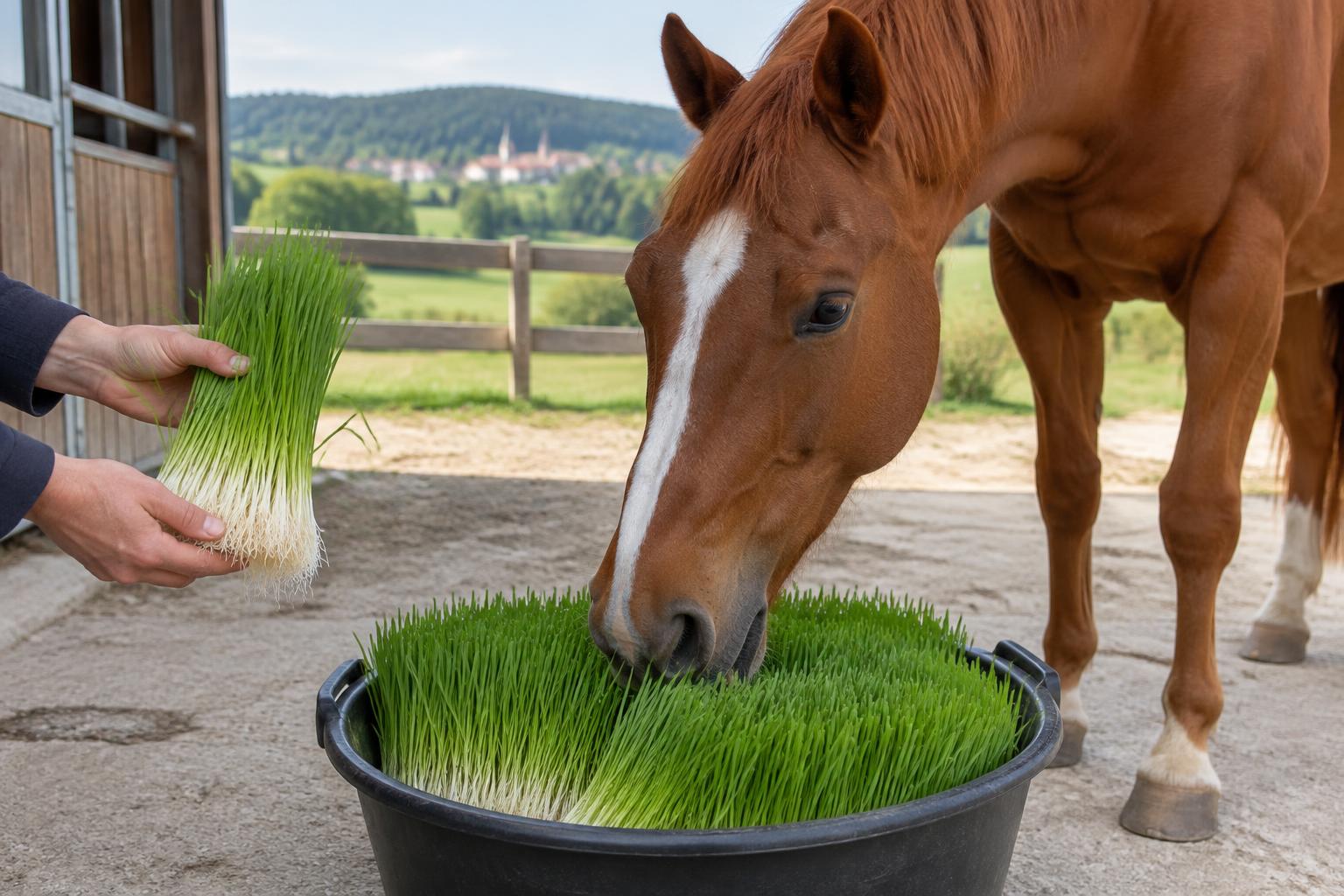
01 / Everyday care
Look at freshness, composition and your horse's feeding routine from a new perspective.
Fresh shoots bring plant-associated water into the ration. Batch analysis determines the precise amount. Clean drinking water must remain available.
Moist shoots differ in texture from dry loose feed. Inspect each portion before feeding. For dust-sensitive horses, discuss feed, bedding and ventilation with a veterinarian.
Young green shoots add variety to the ration's form without added colourings or preservatives. Vitamin, mineral, sugar and starch content needs analysis, not assessment by appearance.
Introduce it gradually and record intake and acceptance. Regular notes help you adapt the feeding routine to your horse.
02 / Fresh weight and dry matter
Fresh shoots contain plant material and water. Compare feeds using dry matter and actual composition — our calculator helps you plan quantities and costs clearly.
Fresh fodder can be an interesting supplement, but it does not automatically replace hay, pasture or concentrates kilogram for kilogram. Horses with controlled sugar and starch intake need analysis and a professional plan.
Compare dry matter and costsGood hay or suitable pasture remain important sources of long fibre and opportunities to chew. Introduce new components gradually, inspect every portion and plan the ration with an equine nutritionist or veterinarian.
Explore the feeding guidePeople, horses and everyday feeding
Genuine experiences from people interested in fresh horse feed.
Do you feed fresh barley fodder to your horse? We would love to hear about your experience, feeding routine and how your horse accepts it.
Gallery

From grain to trough
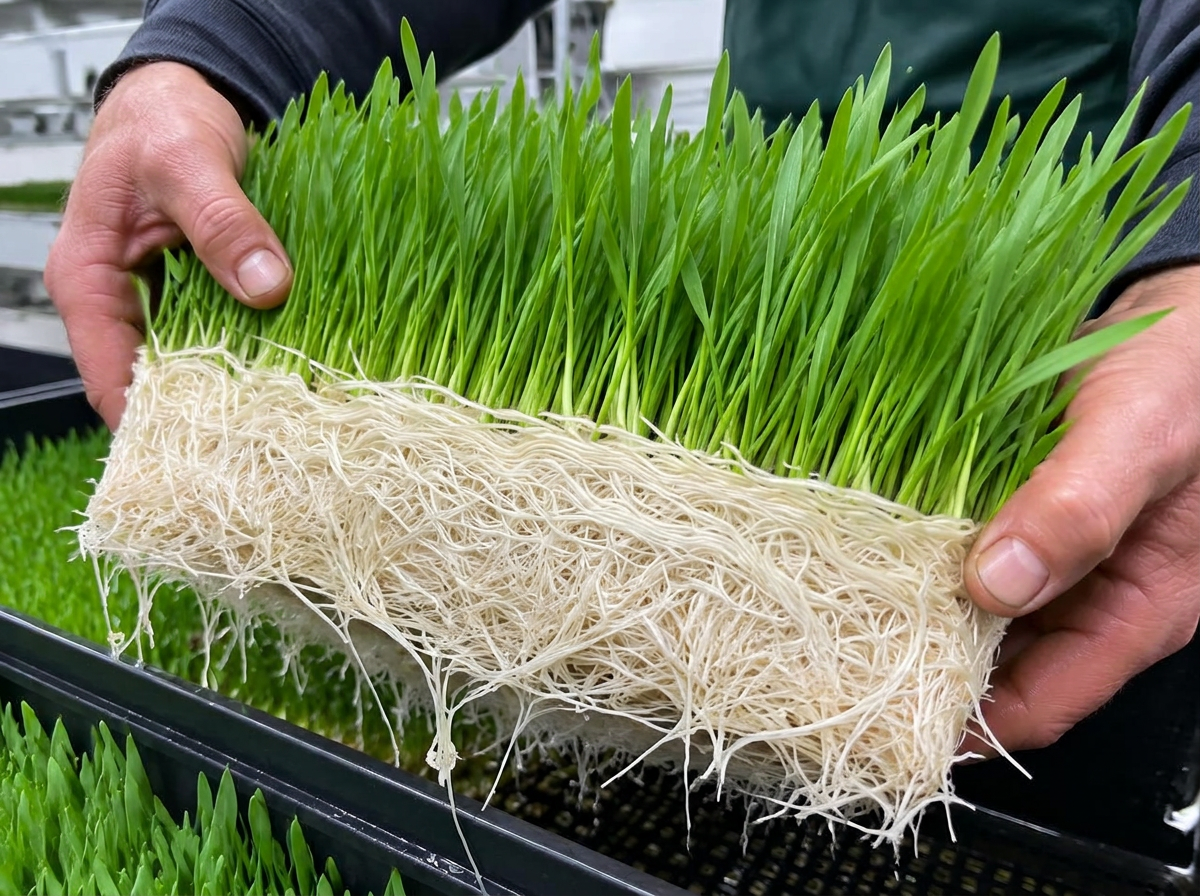
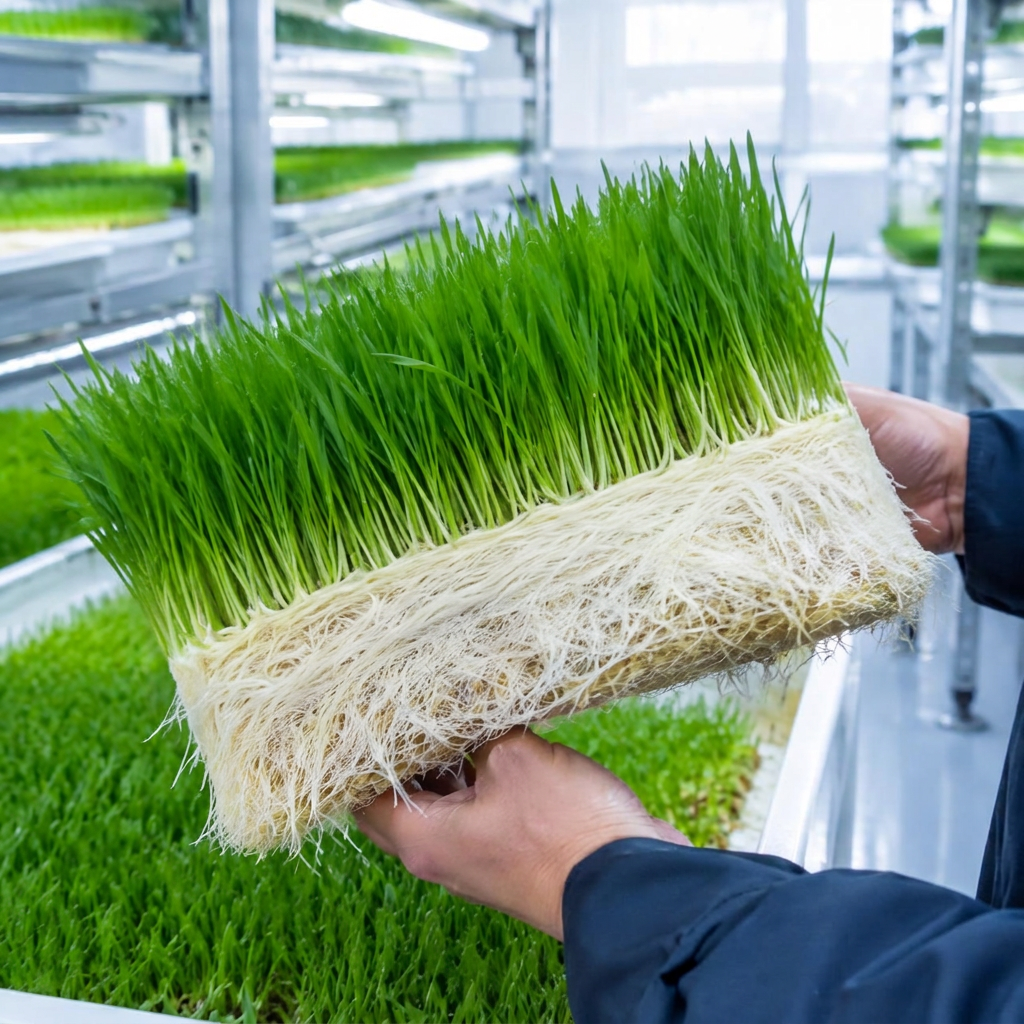
Barley grains sprout in a clean environment with no soil or chemicals. Within a week they grow into a dense green mat with roots – and your horse eats all of it. That's why we need at least 10 days to prepare your order.
Day 7: Harvest
Fresh fodder is ready for horses.
25 CZK
per kilogram of fresh fodder
200 CZK
minimum order with delivery (8 kg)
25 km
free delivery around Louny from 200 CZK
| Quantity | 8 kg | 20 kg | 50 kg | 100 kg |
|---|---|---|---|---|
| Price | 200 CZK | 500 CZK | 1250 CZK | 2500 CZK |
At least 10 days ahead – sooner if we have stock.
Quantity, address and contact. No upfront payment.
We personally confirm your order by email or phone.
We bring fresh fodder on the agreed day.
Growing · Feeding · Returnable tubs
Barley grains germinate in a clean, controlled environment without soil. In around seven days, green shoots and a dense root mat develop. Finished fodder consists of shoots and roots, without seeds or husks. We harvest it fresh and deliver on the agreed day.
The amount depends on your horse’s weight, workload, individual needs and whole ration. Start with a small portion and increase gradually. The Feeding Guide includes an illustrative four-week plan and a weight-based calculator. Fresh fodder contains water, so do not replace hay kilogram for kilogram. Maintain appropriate fibre and clean drinking water; discuss individual amounts with an equine nutritionist or veterinarian.
Open the feeding calculatorEach large tub has a refundable 150 CZK deposit. One tub holds 30 kg: up to 30 kg needs one, over 30 to 60 kg needs two, and over 60 to 90 kg needs three. The count updates automatically for stable group orders too. The deposit is separate from the fodder price and is not discounted. We refund it in full when we collect the undamaged tub.
View ordering and deposits
The natural choice
for brighter tomorrows ♡